Global warming is significantly impacting the world’s coffee production. Rising temperatures, changing rainfall patterns, and the increasing frequency of extreme weather events are now a serious threat to one of the most economically and socially important crops.
From the “Coffee Belt” to a New Production Zone?
Il coffee is typically grown in the so-called “Coffee Belt,” an imaginary line that stretches around the world between the Tropic of Cancer and the Tropic of Capricorn, where the climate is suitable for growing coffee plants. However, due to global warming, the range of areas with ideal temperature and altitude for cultivation is shrinking. According to the Climate Institute, the territories suitable for coffee production could decrease by up to 50% by 2050, forcing farmers to move to areas now used for other purposes.
A multifaceted issue
Decreasing productivity, the rise of pests and diseases, higher production costs, and reduced arable land due to soil erosion and deforestation are just some of the consequences threatening global coffee production. What is happening?
- Higher temperatures tend to compromise the quality and productivity of coffee bushes. Above 23°C, plants suffer from heat stress, which negatively affects fruit development and bean quality. Even the Robusta variety, which is more resistant to high temperatures, can be affected by water stress, leading to a decrease in yield under excessive heat.
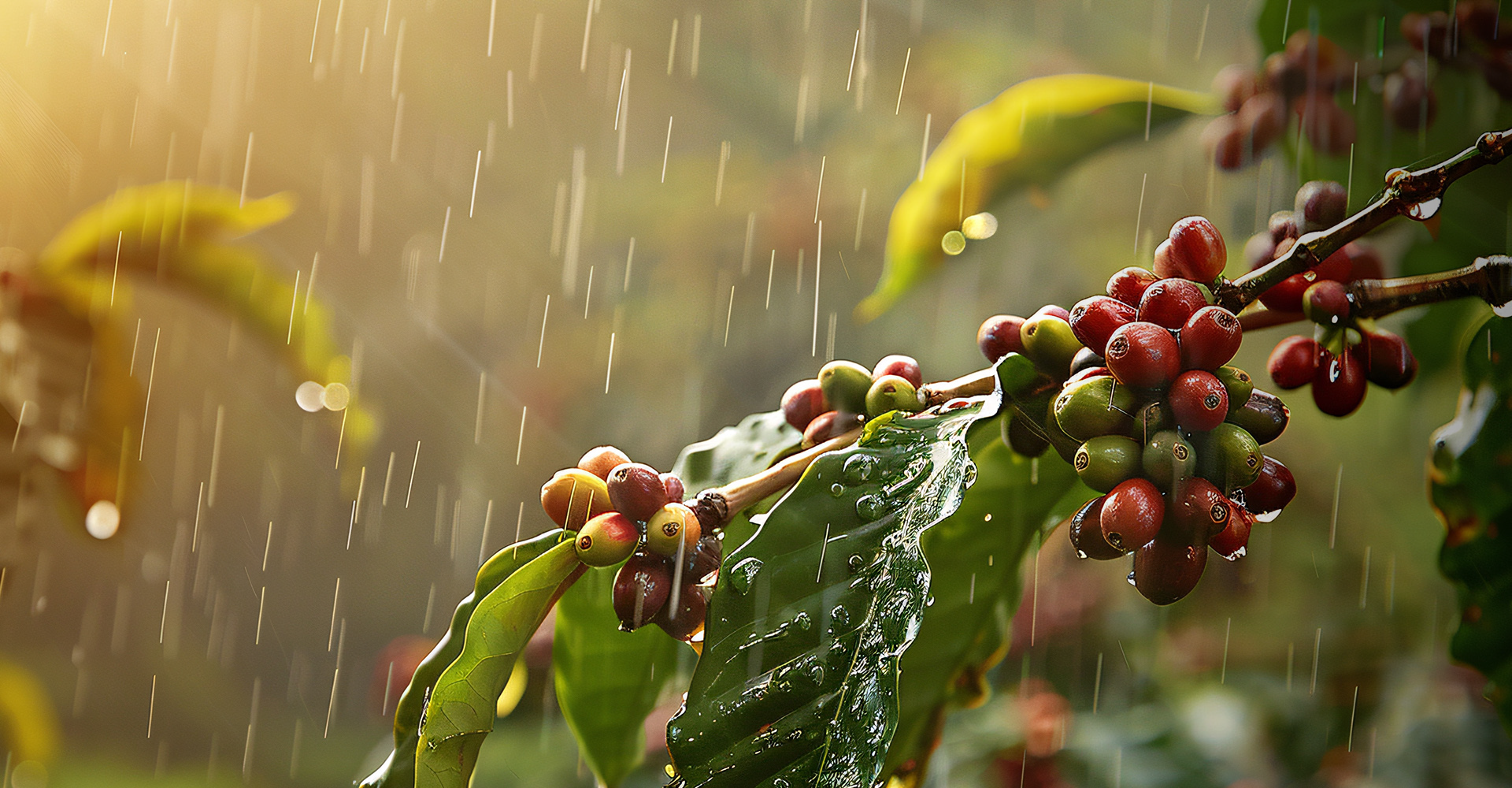
- Rainfall patterns have become irregular and extreme, no longer concentrated in the winter months up to August but occurring unpredictably, even during the harvest period, which has negative consequences in areas with already fragile infrastructure. Additionally, prolonged droughts can lead to reduced flowering, and consequently, lower production. On the other hand, excessive rainfall increases the risk of fungal diseases such as Hemileia vastatrix, known as coffee rust, which causes significant damage to plantations, especially in Latin America.
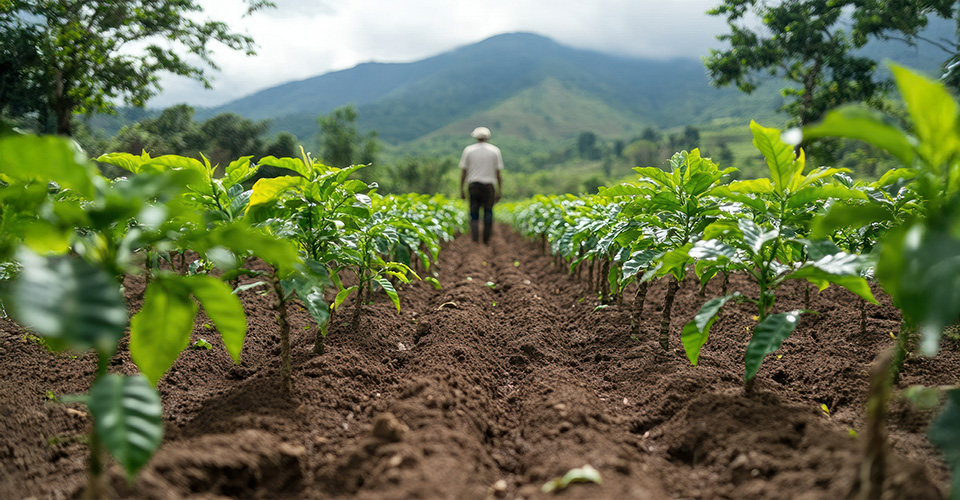
- Climate change also has significant social impacts: labor is becoming more demanding and expensive, and producers are being forced to relocate their crops to higher altitudes, though not all countries have suitable mountainous areas. The reduction in cultivated areas is inevitably causing an evolution in agricultural economies, with millions of jobs at risk.
How to Face These Changes?
A targeted approach is needed to raise awareness and enhance the ability to respond to the climate change threat. Producers and researchers are selecting heat-resistant, drought-resistant, and disease-resistant coffee varieties. Additionally, many farmers are investing in more efficient irrigation systems and soil management techniques that improve the resilience of plantations. Finally, training and support programs for farmers are crucial since most of the world’s coffee production comes from small businesses that often lack the resources to adapt independently.
Can Organic Farming Reduce the Effects of Climate Change?
The impact of climate change on coffee production is a complex issue that requires interventions at various levels, from local adaptations in production areas to global policies aimed at reducing emissions. Organic farming could also play a role, as it results in 50% lower emissions compared to conventional farming. Organic coffee, grown without pesticides or chemical fertilizers, helps reduce soil and water pollution, promotes crop diversification, and increases plantation resilience to climate change.
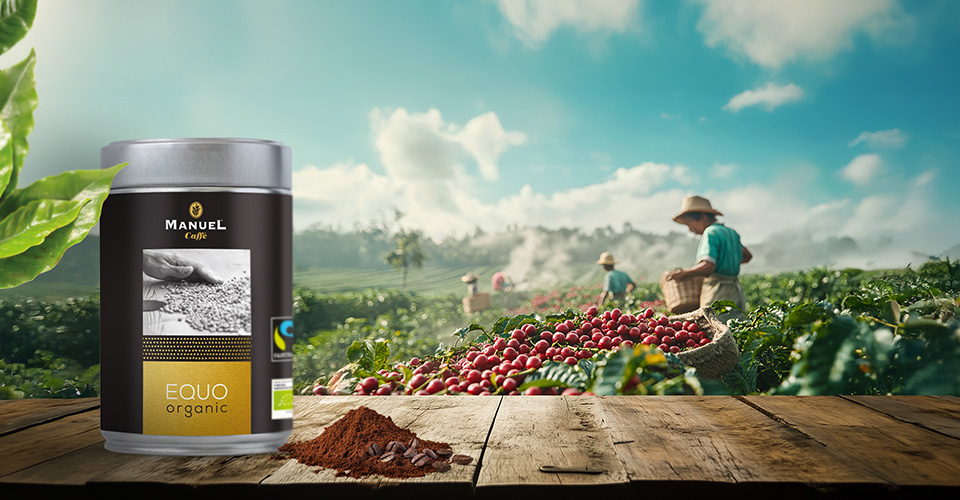
At Manuel Caffè, we are committed to environmental sustainability and to supporting the many small producers who work diligently to cultivate high-quality raw materials. Equo Organic is our organic and fair-trade line: the response for those who demand respect for nature and those who grow it. A sweet blend with bright acidity and a citrusy aftertaste—good all around!