In the vast and fascinating world of coffee, every detail—from the botanical variety to the roasting process—has a direct impact on the final quality of the beverage. Among the curiosities that characterize this crop, peaberry is undoubtedly one of the most intriguing and discussed elements. But what exactly is it, and why is it considered a “positive anomaly”?
What is Peaberry?
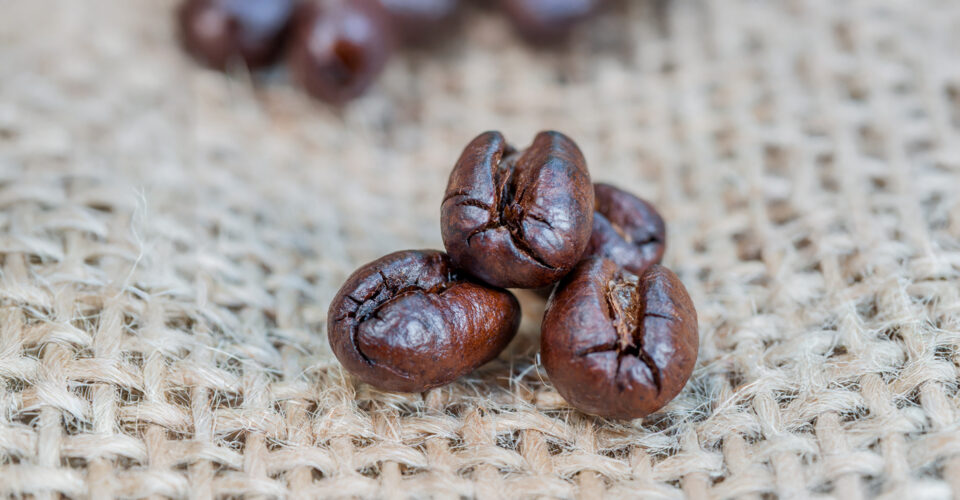
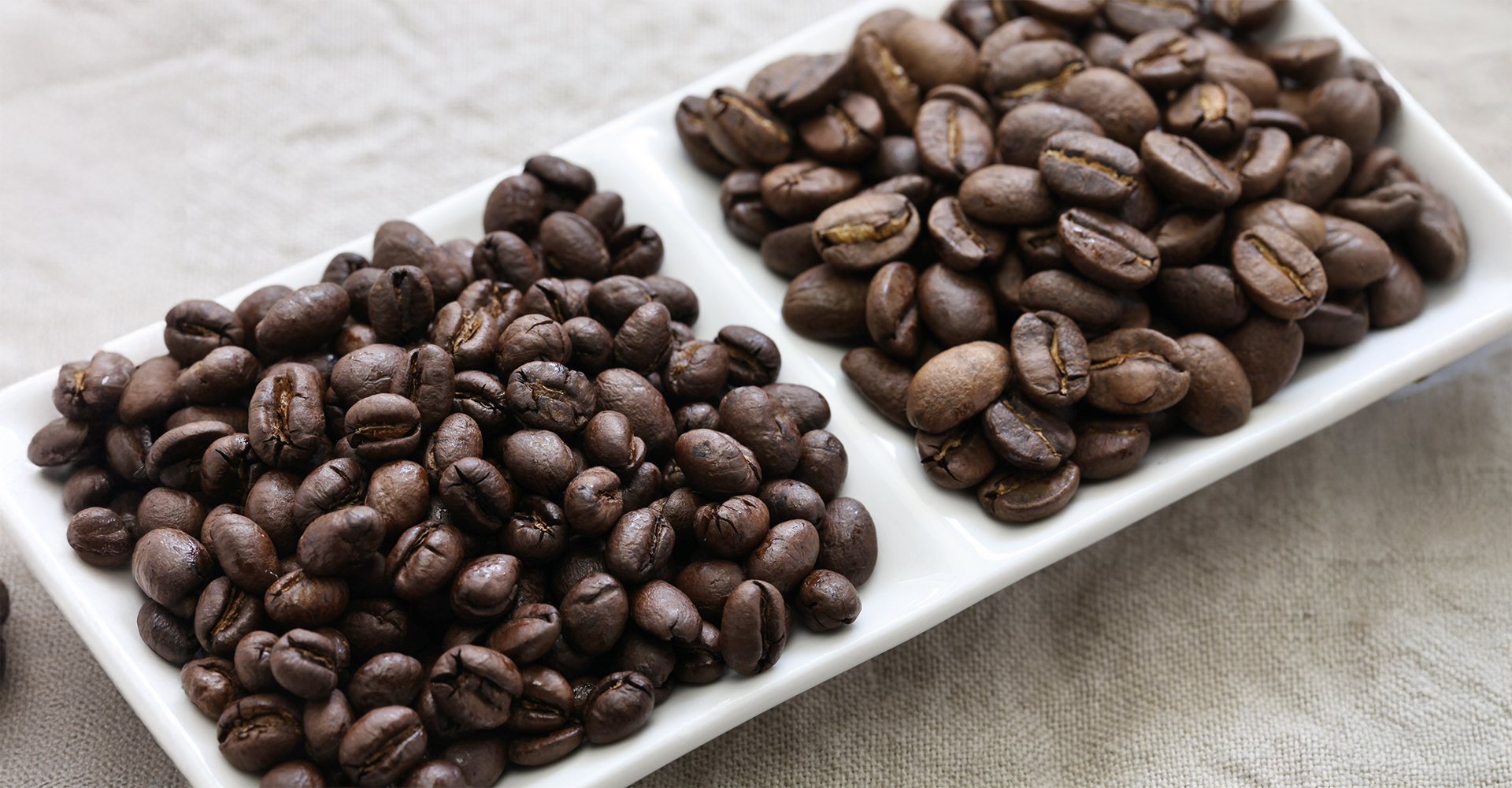
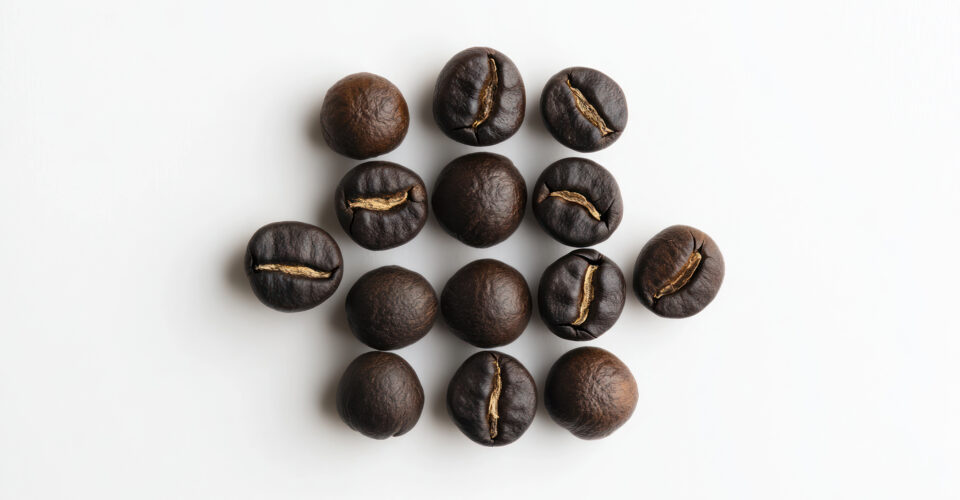
In a typical coffee cherry, two seeds grow side by side, taking on the characteristic flat shape on one side and rounded on the other. However, in the case of peaberry, an unusual phenomenon occurs: inside the cherry, only one seed develops. This results in a single, round bean—known as Peaberry.
It is estimated that around 5-10% of the total harvest from a coffee plantation may contain peaberry, making it a relatively rare element. This peculiarity doesn’t depend on a specific variety but can occur in all major cultivars of Coffea Arabica and Coffea Canephora.
Some of the most famous origins for peaberry include coffees from Tanzania, Kenya, and Central America. In particular, Tanzania Peaberry is highly appreciated for its citrusy and floral notes, representing the excellence of this type of bean.
Why Does it Form?
The formation of peaberry is due to a natural mutation during the development of the coffee cherry. Essentially, one of the two ovules inside the fruit fails to fertilize or doesn’t develop properly. As a result, the single seed left behind has more space to grow, taking on its characteristic spherical shape. Although the exact reason for this occurrence isn’t entirely clear, it remains a natural phenomenon that does not negatively affect the health of the plant or the overall yield of the crop.
Special Features for Unique Beans
Many experts in the coffee industry attribute some distinctive features to peaberry that make it particularly interesting for roasters and coffee enthusiasts.
- Shape and Density: Being more compact and rounded, peaberry tends to roll more easily in the drums of roasting machines, allowing for a more even roast. Additionally, its higher density may impact its ability to retain aromas.
- Aromatic Profile: While there is no definitive scientific proof, many claim that peaberry has a more intense aromatic profile compared to regular beans. It is often described as having greater sweetness, lively acidity, and a more pronounced complexity of flavor.
- Rarity and Selection: Since peaberry represents only a small portion of the total harvest, the beans are often hand-selected, adding an extra level of care in the production process.
Is it really a positive anomaly?
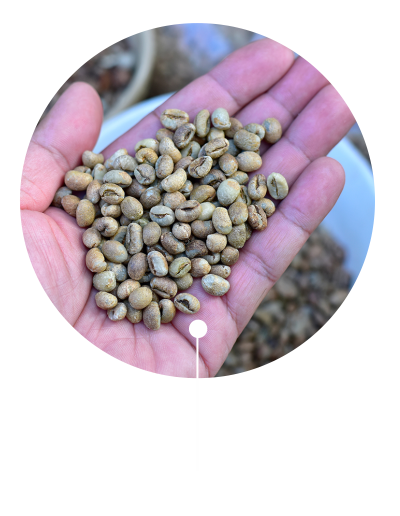
Biologically, peaberry is indeed an anomaly since the formation of a single seed per cherry is not the norm. However, this peculiarity has no negative effects on the plant, and in fact, it represents a distinctive characteristic that can be leveraged in terms of product quality and marketing. Peaberry is considered a niche product, targeted at connoisseurs. Some roasters promote it as an exclusive choice, selling it at a slightly higher price compared to traditional beans.
In any case, peaberry is a fascinating example of how nature can surprise even in well-known fields like coffee. This small anomaly, though rare, has captured the interest of experts and enthusiasts alike, thanks to its unique features and its potential to enrich the sensory experience.
Whether it is truly a positive anomaly or simply a curiosity marketed for its uniqueness remains a subjective matter. What is certain is that peaberry adds an extra layer of diversity and richness to the wonderful world of coffee, inviting us to explore every nuance.