open question that confronts consumers, “know-it-all” commentators and the curious, but also many of the participants in our @saperecoffeeacademy courses. So let’s try to give an answer to this household dilemma that can, however, compromise one of our most popular daily pleasures: the coffee ritual.
Coffee, unlike other products intended for human consumption, does not undergo biological deterioration, that is, it does not spoil at a microbial level that could be dangerous to health. However, it is necessary to store it properly to prevent – or at least slow down – the chemical, physical and organoleptic decay to which it is particularly subject.
Glass, aluminium and tinplate – tin – offer the maximum barrier, but can be impractical and expensive.
Paper – even if the packaging is sealed – is the material that allows for the fastest oxidation of the roast.
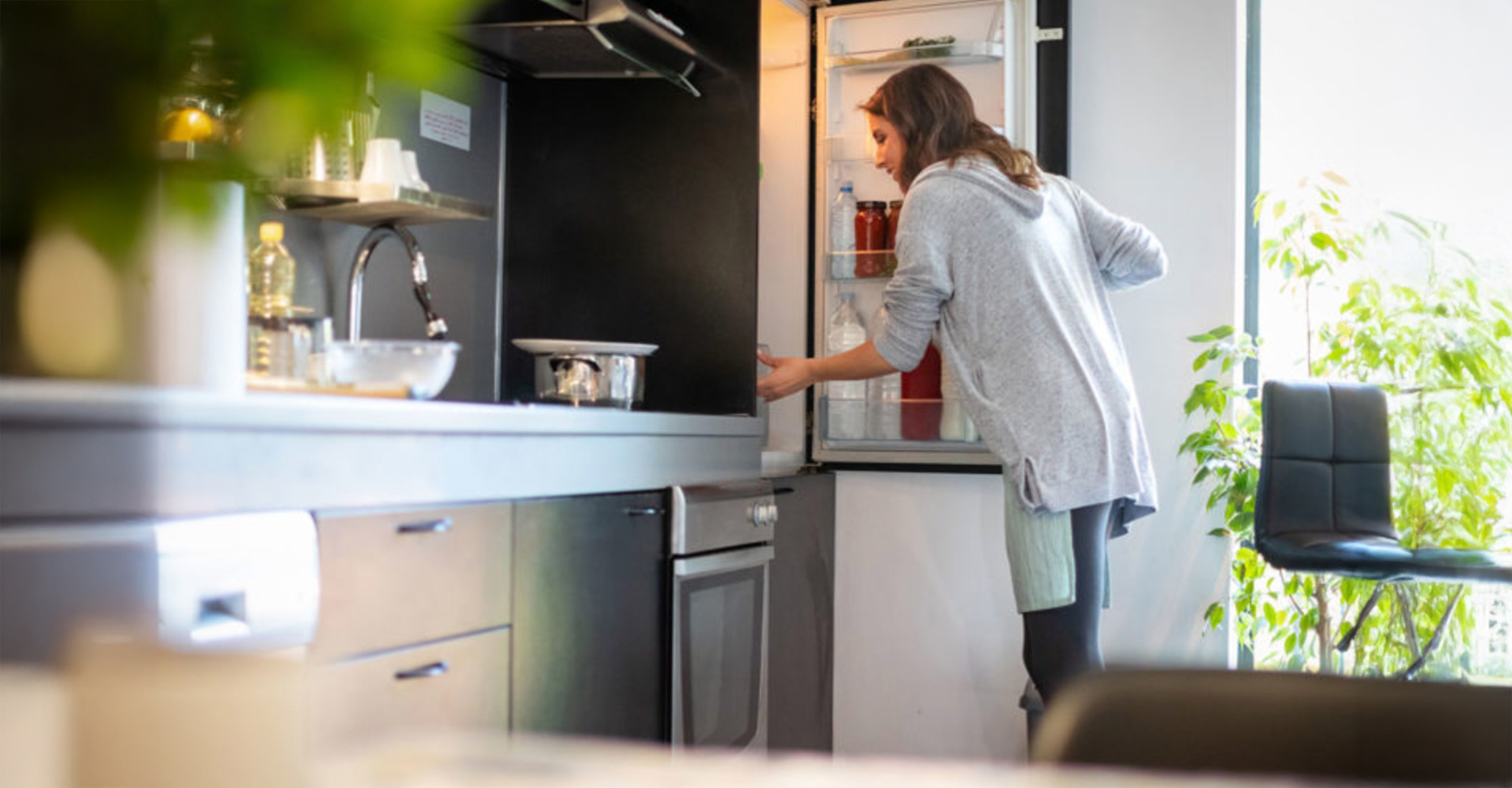
While it is true that low temperatures slow down the aging process of our beloved beans, it is also true that humidity and condensation are enemies of the aroma, whose properties are among the most volatile and difficult to preserve, so what to do?
First of all, we must take into account that the main obstacles to the correct conservation of coffee are oxygen, humidity – coffee is hygroscopic -, high temperature – heat -, intense light and smells.
For this reason, in the packaging we always find the instructions for storage in a cool, dry place and never a transparent wrapper. Avoiding aroma-killing agents is the primary objective from the moment of packaging, just think that in contact with oxygen, roasted coffee beans lose their aromatic intensity in the space of two or three days, while for ground coffee, even just 15 minutes can be enough – in the first 15 minutes after grinding, about 60% of the aromas are lost-.
Oxygen kills aromas, makes coffee fats rancid and also inhibits the delivery of aromas to the cup.
In the list of aroma enemies, as we anticipated, we find external smells. Ground coffee, put in small quantities, is a refrigerator “smells absorber” par excellence and if rubbed on the hands after cooking it can be an effective anti-smell.a
Let’s clarify the actual conservation.
During the complex roasting process, in addition to the succession of multiple chemical reactions, which favor the development of aromas, the coffee produces carbon dioxide, which will then remain trapped inside its cells even after packaging.
This carbon dioxide inside the cells of the bean will be our indicator of the freshness of the roast.
The speed of degassing is proportional to the storage temperature of the coffee:
- Roasted coffee beans stored in the cold = slow degassing.
- Roasted coffee beans stored in the heat = fast degassing.
Degassing means the release of carbon dioxide from the coffee cells, keeping in mind that when the gas escapes, the aromas also escape.
Considering what has been said, it can be deduced that the longer we keep roasted coffee beans in the cold, the slower their aromatic deterioration will be. Yes, that’s right!
However, you will need to pay attention to some very important details.
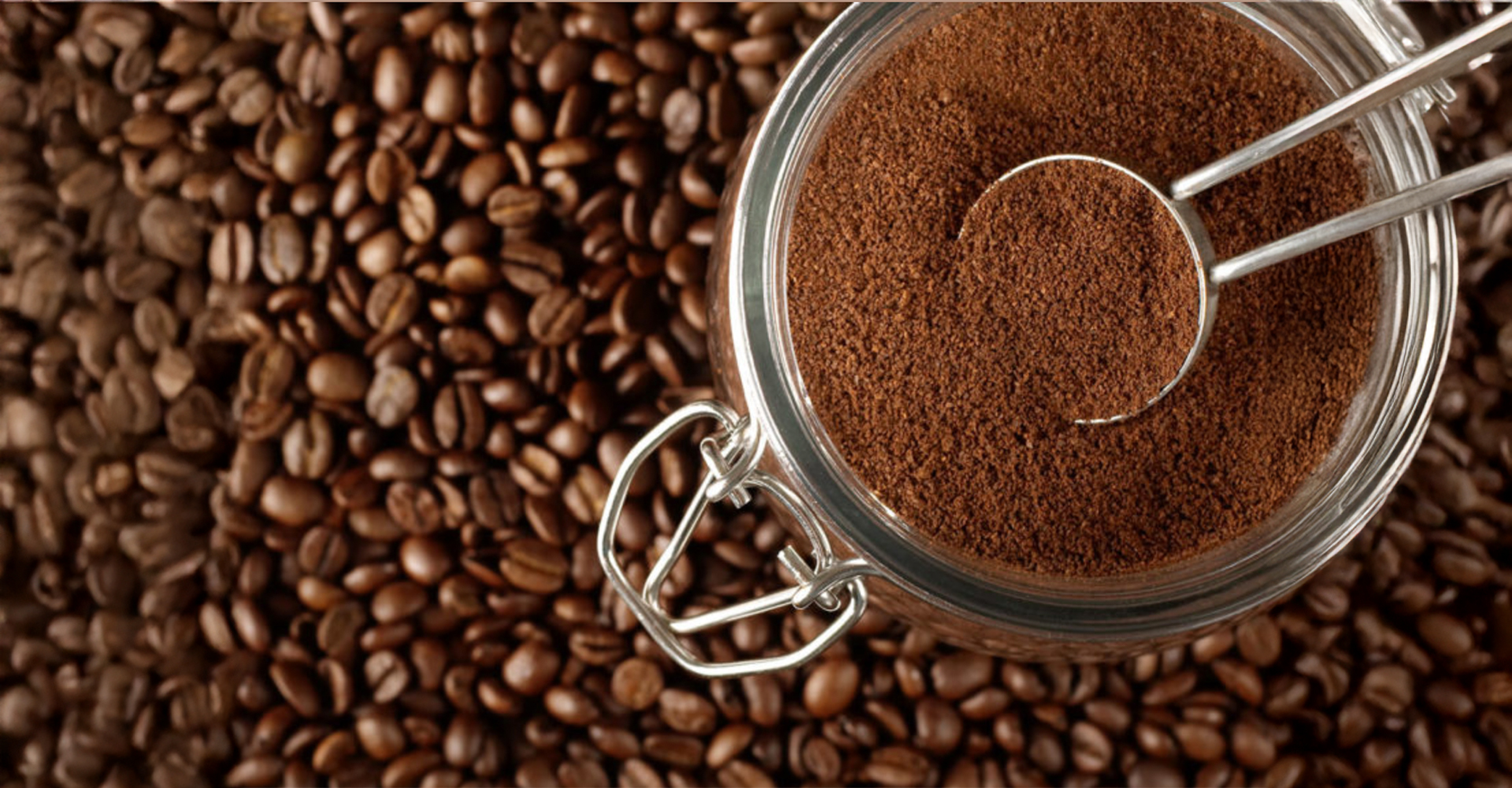
Coffee beans can be stored in the fridge, taking into account the use of a sealed and chemically inert container (glass, aluminium or stainless steel). In other words, a glass jar with an airtight seal and a rubber gasket!
If the container did not have these characteristics, it would not be the low temperature of the fridge that would damage it, but rather the humidity, odours and oxygen.
As you will have understood, the big problem does not arise in the conservation of coffee beans but in that of ground coffee, which as we have said loses more than 60% of its aromas 15 minutes after grinding.
At Manuel Caffè we do our best to reduce this process, packaging the ground coffee immediately after grinding, vacuum-packing the product and inserting nitrogen into the packaging to further saturate the environment and reduce the oxygen percentage to almost zero.
So how do I store my ground coffee at home?
Basically, if we pay attention to what is written above, there are not many systems to store ground coffee. Our coffee bean, once ground, immediately begins its oxidation process. (Even coffee beans are subject to oxidation, but slower).
Having said that, I can give you two pieces of advice:
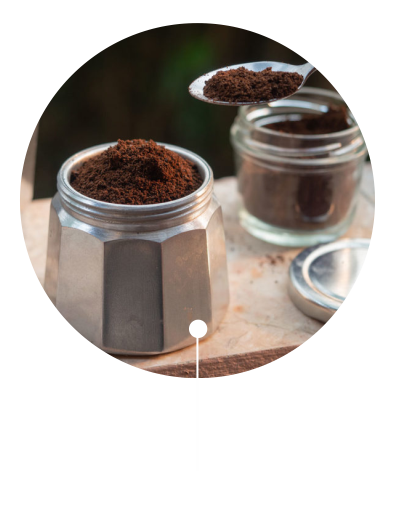
– try to buy small packages of ground coffee, so that the consumption time is quite fast. Keep the ground coffee in a glass jar hermetically sealed with a rubber gasket, in the dark and possibly in a cool and dry place. We repeat, this is not the official system for preserving the ground coffee once the package is opened, because the ground coffee should not be preserved, but at least it is an extra precaution that we can take to get the maximum benefit from the drink.
– you could try to buy the coffee beans and get a “hand-grinder” (manual coffee grinder) that you can find on the market for a few euros, €20-30. This method would ensure the maximum expression of the aromas in the cup because you would make your coffee infusion immediately after grinding it and, above all, you could preserve the beans in a very simple way, as mentioned before.
Our advice to get a coffee that lives up to your expectations is to buy the jar, perhaps the smaller 125g one from the Linea Casa collection.