sensory analysis is the science used to evaluate the organoleptic attributes of a product through the senses, i.e. sight, hearing, smell, taste, touch. And it can be applied to any product, involving different senses.
For the product coffee, the sensory analysis is carried out by professional tasters based on standardized preparation protocols, specific tests, choices and rules.
But how does this type of analysis affect the quality control of coffee?
First of all, coffee is a raw material, a food, a nourishment, therefore not something that is always the same and always stable. Coffee is a fruit that is constantly changing given its natural origin, because when a plant flowers and then bears fruit it is subject to changes in the atmosphere, the soil and temperatures. It is never the same as the year before.
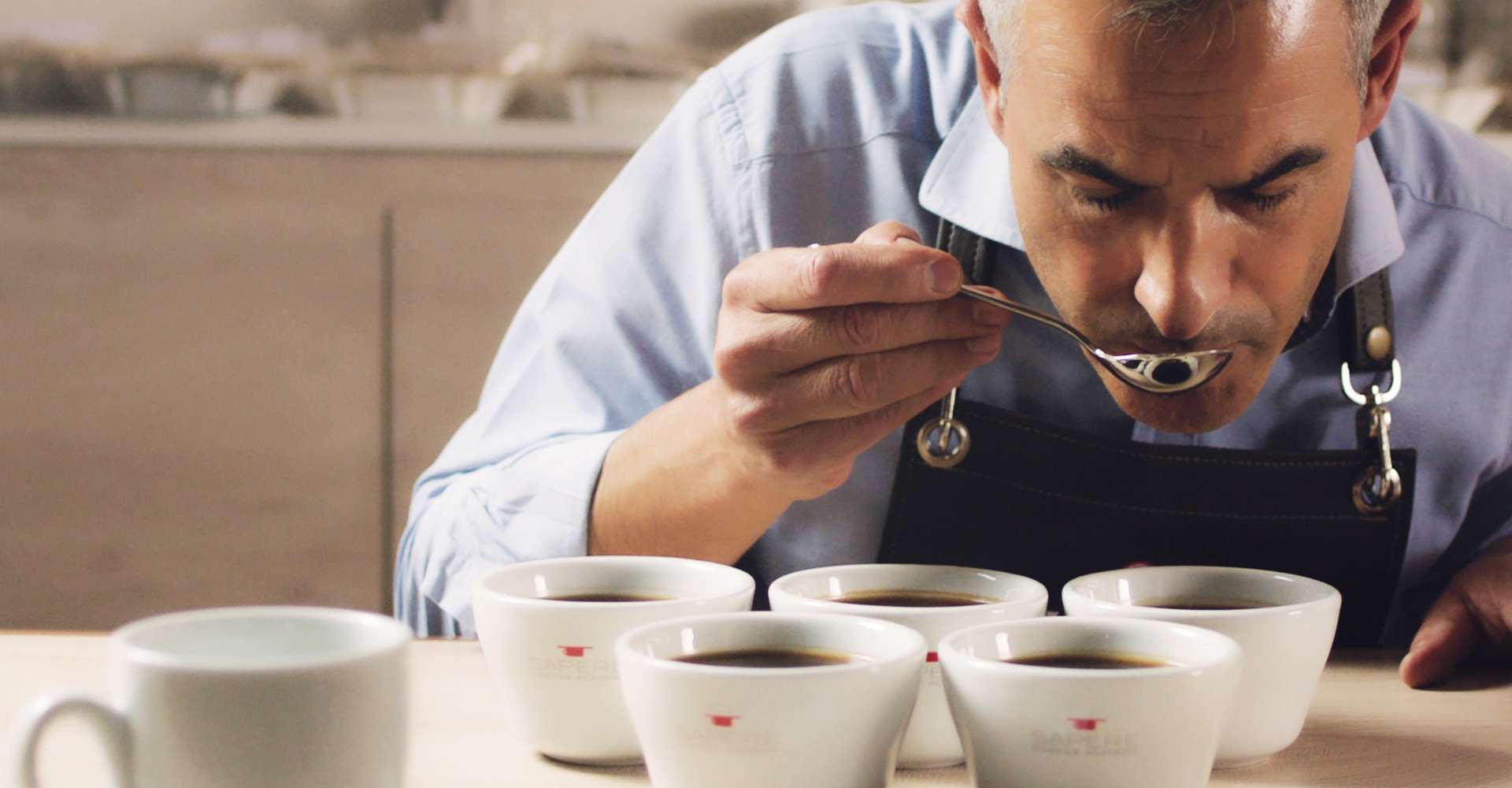
But the sensory analysis is not used to establish whether the coffee “we like” or “we don’t like”, but rather to evaluate its characteristics through a rigorous international tasting protocol: the cupping protocol.
If we want to make a transition furthermore, it goes without saying that each function of our machine corresponds to a “mechanical” component.
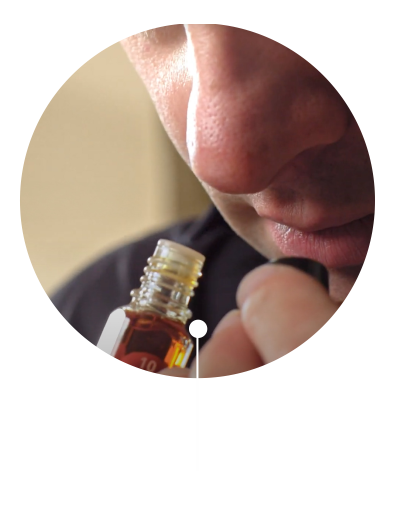
In the step you see above, the crust of the coffee is broken and it happens 4 minutes after the start of the infusion. Breaking the crust gives the maximum expression of the aroma. In this phase the taster gives the final score to the AROMA attribute in the SCA Cupping Form – international evaluation sheet-.
Think if a coffee that is tasted here in Italy after being born, harvested and traveled from Colombia, had not been tasted and evaluated according to standard parameters recognized by Q-Graders in its place of origin, how could we know if that coffee maintains intact the qualitative characteristics for which it is sold and bought and drunk? Impossible. For this reason, even in Colombia, a local Q-grader performs a standardized tasting and sample preparation protocol.
In the countries of origin, in fact, the Q-Grader -Quality Certifier– uses the “cupping protocol” to have international standards on the evaluation parameters of coffee. It is very important that the tasting panel is well calibrated and impartial because the quality attributed to the green coffee and consequently its economic value will depend on these scores. In the roasting plant, the Q-Grader performs quality control on the purchases of batches of green coffee.
The “cupping protocol” is the procedure of sensory analysis that tasters use to evaluate the quality of coffee. It identifies potential defects and contaminations -taints-, pleasant flavors and their qualities, evaluates the intensity of the sensory characteristics and records the results. In short, it establishes an overall vision of the potential of coffee, which can be refined and adjusted through roasting, blending and extraction practices.
How does “cupping” happen? A tasting of the sample divided into five cups is planned. Each cup is weighed and ground individually respecting an infusion recipe of 55g/L and a coarse grain size -850 microns-.
The reason why the sample is divided into five cups is to have a broader and more precise vision and to be able to isolate – only on one cup, not on all 5 – any contamination or defects. In this case, for example, in the “cupping form” only that cup will be penalized and not all 5, so if the sample were of high quality it could still receive an adequate score.
Based on the results, the evaluation sheets are filled out with all the characteristics of the sample and based on this data that particular coffee tasted will have a certain value that is not only economic, but qualitative.
It is based on this analysis that the coffee is classified and the “cupping protocol” is the means to evaluate it.
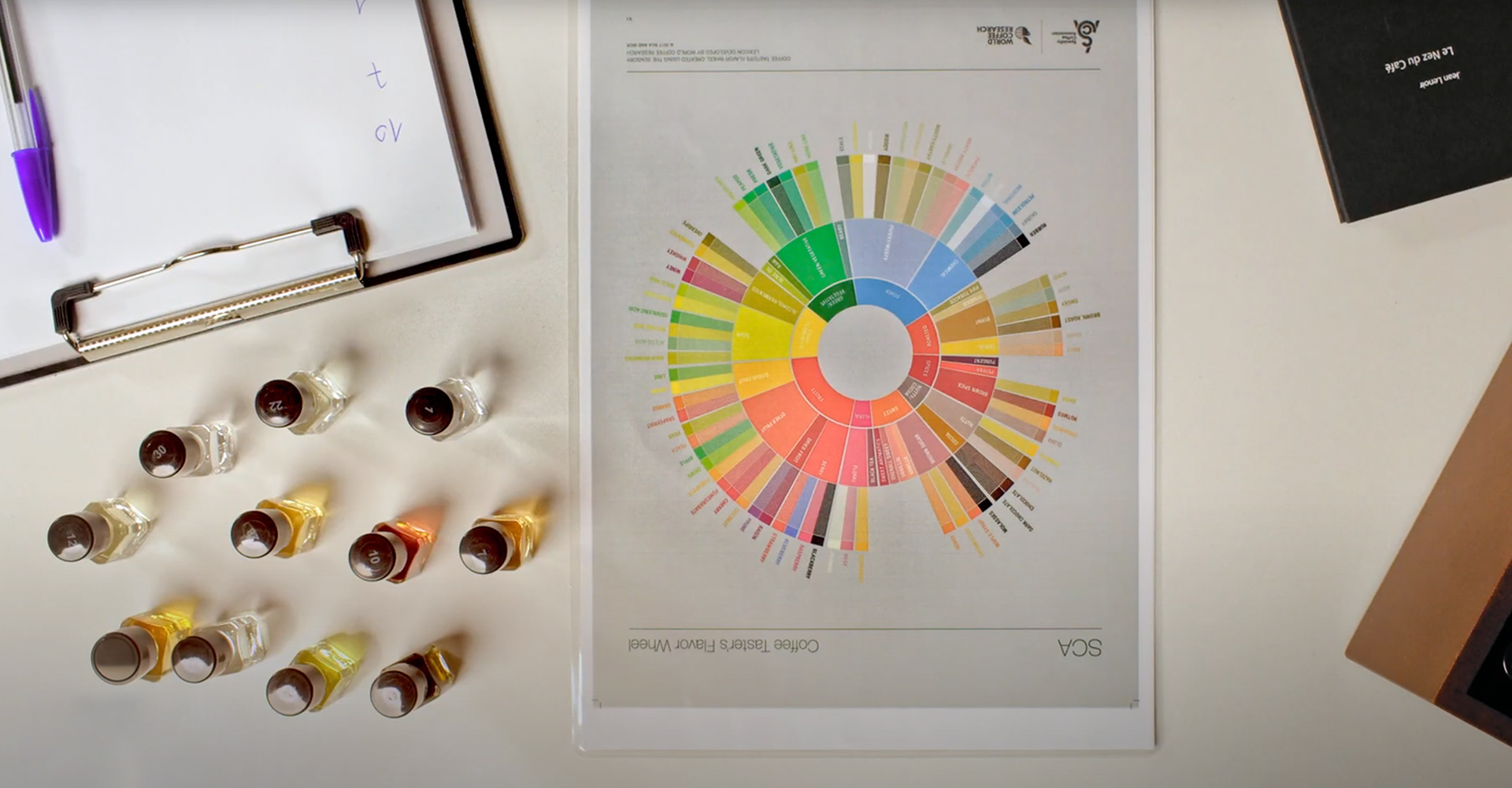
To learn more, we are waiting for you at @saperecoffeeacademy at the course Sensory Skills Foundation, where knowledge becomes know-how. Good. For info: Sapere@manuel.it info@manuel.it
And now enjoy your coffee!